He set the global standard for digital experiences – now he is taking on the world of education
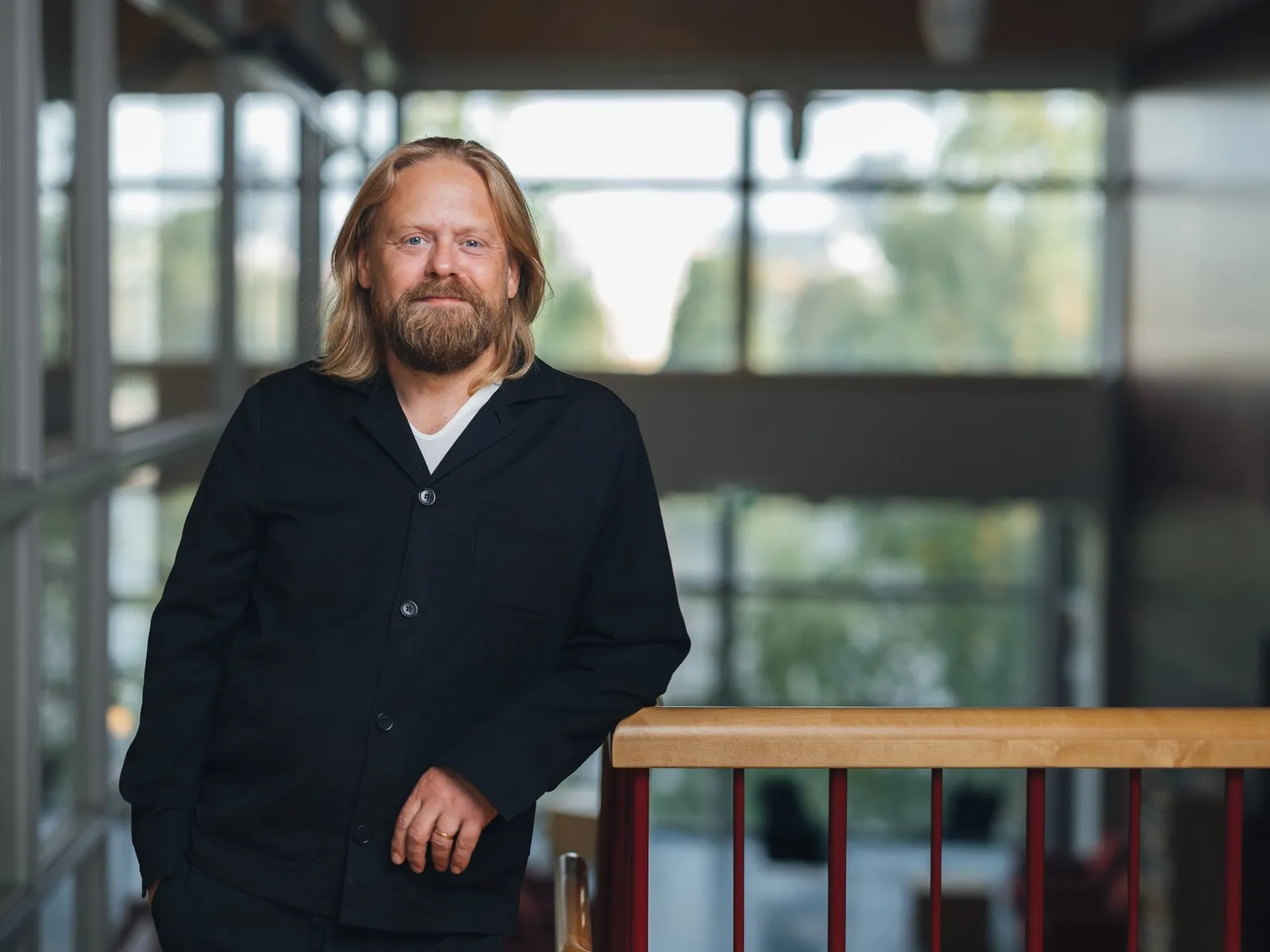
He started out as a secondary school teacher, but went on to become a pioneer of digital experiences for world-famous brands such as Disney, Google, Adidas and Lego. His driving force has always been the same: using technology to explain and simplify. As development manager at SUA, David Eriksson now wants to take learning into its next era.
Back in the 1990s, David worked as a French teacher at a secondary school. But he quickly realised that school was not always enough.
“I saw many talented and creative people who didn’t fit the school mould. As individuals, we all have different ways of learning. Some want to read, some want to discuss, others want to learn hands-on. There are many ways of adapting information to different learning styles.”
His next step was a vocational programme in multimedia development at Campus Skellefteå. There were two tracks: the internet or CD-ROM. David chose the internet, which perhaps says something about his sense of where the future lay.
“I learnt an incredible amount. That was where my interest in human learning and new technology began to grow.”
Quickly became a world leader in his field
Since then, he has had a long career focused on precisely this interplay between people and digital tools. David is one of the founders of the agency North Kingdom, which is regarded as a world leader in digital experiences.
North Kingdom’s first client was Vodafone, with 400 million users worldwide. The brief was to explain how technology would develop over the next 10–15 years. Today that sounds obvious, but in 2004 the general view was that mobile phones were for making calls.
“It was a way of working with learning – explaining this to different people and packaging the message for different audiences.”
North Kingdom’s solution won two golds at Cannes Lions and became the most awarded website in the world in 2004.
“We were the first with moving images on the web. We always wanted to make use of the latest technology to create better learning. The driving force was always: how can we do something better?”
Commissions followed for some of the world’s best-known brands: Lego, Disney, Meta, Adidas, Google. The list says something about how the agency was at the technological cutting edge, but also about how David and the team succeeded in adapting technology to different audiences.
“We were the first with moving images on the web. We always wanted to make use of the latest technology to create better learning. The driving force was always: how can we do something better?”
The next chapter: a testbed for learning
Over the past year, he has worked with Google, focusing on the gamification of their global cloud products. Now he is at SUA to build the testbed for the learning of the future.
“Technology is available to everyone, but the risk is that not everyone will be able to use it unless we educate people. We have to adapt learning to the individual. I’ve worked with gamification to make learning more fun. With new forms of education, we can take the best of academia and technology and cultivate abilities in people that leave them better equipped for the future.”
He cites creativity, critical thinking and problem-solving – so-called meta skills – as examples of abilities that must become a bigger part of education. At the same time, the labour market is changing rapidly.
“Three years ago, nobody knew what a prompt engineer was. The knowledge cycle is so short that knowledge can be out of date after just a year. That makes the ability to learn how to learn crucial.”

For David, the vision is clear. Skellefteå can become a place where people from all over the world come together to learn in new ways – a model that others can draw inspiration from.
“If we combine all the world’s knowledge that is available through online distance learning with hands-on application on site, we can create a different way of learning. One where students get to use their knowledge straight away, with the latest technology and with individual supervision. You learn in a safe environment, gain an understanding of yourself and of how you communicate with others, and learn what is perhaps the most important skill of the future – critical thinking.”
When he talks about what attracted him to SUA, he keeps coming back to the drive to make things better.
“SUA feels like a blank sheet of paper. Here there’s a chance to build something completely new. There is so much to be done in education – you just have to get on with it.”